
… the other in the dirt

jason 2010

Jason’s most recent long fiction title is the Gothic tale Salvage (Twelfth Planet Press), with his outback vampire duology Blood and Dust and The Big Smoke to be launched in May with Clan Destine Press.
Read it first: Pre-release Taste Test Teaser in 
The Big Smoke here.

Back:

J: I certainly feel different to the mainstream, if we can pinpoint that, because of my role in the creative industries – it’s not nine to five, bank managers hate me, it feels underappreciated in our culture whose values and priorities increasingly puzzle, frustrate and disappoint me (I am not the ultra-conservative country kid I once was). There is an uncomfortable friction between art and business and the expectations of reward from both. Many of my most valued friends are creative types now; it’s a wonderfully supporting and welcoming community.

M: I agree. The business of Art isn’t quite like the ‘business of everything else’. More people taking chances. Proactive individuality?
Of course, many writers are niched into genre of one sort or another. Which may seem to deny a writer his (or her) individuality.
People like to slip you into Horror (I don’t necessarily see that.).  And your workshop is focussed on Horror tropes.  But how do you categorise what you write?

J: I grew up reading all manner of genres, but it was speculative fiction that reeled me in – those big ‘what if’ questions, the powerful imaginations, the derring do. Lovely stuff! So that’s what I write, in my way, but I’d agree with you: not a hell of a lot of my stuff is ‘horror’, in that I’m not writing it to try to scare the reader, and certainly not gross out the reader (that gross-out stuff, in whatever media, doesn’t interest me – I want my thrills to linger, and ‘ew’ doesn’t cut it).
Some of my short stories are horrific, some are not, and some might be unsettling – I love the Gothic mode, in terms of atmosphere – but probably dark fantasy or urban fantasy (or rural fantasy) is more accurate than horror.
My novels have moments of horror, perhaps, but I don’t really think of them as horror novels. The Vampires in the Sunburnt Country duology, for example, have vampires as protagonists, but they’re not creeping down convent hallways looking for naked necks; they’re charging around in fast cars staking out (heh) turf (so still concerned with necks, but violently and virulently). They books are adventures, thrillers, crime-tinged. The vampires are not there to scare but to comment on issues of social structure, on politics, on humanity.

watermarks

I’ll be dipping my toe back into this world considerably in the near future — sorry, Brisbane, but you’re in for a rough time.

And indeed, the main project I’m working on now (for uni, as mentioned above) is science fiction – climate change fiction set in near-future Brisbane (following on from the ‘Watermarks’ short story that was published last year in Cosmos (yay!)).

 M: Yay indeed. What about the future horror (and its various subs)? Do you find it a flourishing genre? Would you care to speculate?

J: Most of the horror/dark fantasy I read these days is in short fiction – it tends to be Gothic and psychological, evolutionary stuff rather than mired in the tired tropes of the ’80s that did so much damage to the genre’s reputation (lazy writing, lazy stories, gore, misogyny).

M: Oh! Harsh. Have to agree though.

J: I suspect those publishers who say they don’t want Horror are referring to that tripe. Publishers want stuff that has something to say, expands the tropes and uses them in different ways; that bring a higher level of craft to the table than we might have seen in those less enlightened efforts.
I’m a bit out of the loop in long fiction, but check out any horror anthology by American editor Ellen Datlow for a taste (Fearful Symmetries is a recent one, very solid); Australian anthology Suspended in Dusk has got good notices (I’ve not read it yet); the Australian Horror Writers Association publishes ‘Midnight Echo’ magazine.
The Australian movie The Babadook (2014) was a brilliant use of horror tropes as metaphor while still being quite chilling. It’s a peek at one thing we these days are afraid of: loss of self through mental illness.

M. I think we all owe it to ourselves to check out Babadook. Aus reviewers were unkind. Rest of the world saw something else. May be a Mad Max thing happening.
But back to you. You have a Duology out soon – Blood and Dust & The Big Smoke. Very soon in fact. One doesn’t often see books come in twos. Are you bucking the trends! What makes this story perfect for two parts, instead of the ever-ready three.

J: Oh my, this story of Kevin the mechanic (Vampires in the Sunburnt Country) has been around for so long now; it’s such a relief to have him heading out into the world! The story always had a country/city duality to it, but it was the addition of a second point of view character (a city slicker) that really grounded the yarn, and helped split it into two volumes – Blood and Dust is primarily a road story set in western Queensland, and The Big Smoke is primarily set in Brisbane. The split reflects Kevin’s journey from outback mechanic to vampire vigilante.
Blood and Dust came out in digital-only in 2012 and I wrote it as a self-contained story, with plenty of business left unfinished, but its arc was complete. I’ve worked hard to ensure The Big Smoke can also be read comfortably as a standalone, but readers who’ve read Blood and Dust should be rewarded.

M: Announcements are made daily that Vampires are dead and dusty boring. You just can’t get rid of them, though. The Secret of Longevity seems to be to reinvent the creature. Have you reinvented the vampire? And can vampires still be considered horror?

J: Yes, vampires are still hanging around. They’re adaptable, such wonderful metaphors for so many of society’s ills, and as sexy as hell.
I wouldn’t say I’ve reinvented them here, but I have developed them: the need for blood is given new importance, some tropes remain, others have been dispensed with. There are some cool powers in the mix, too, carefully restrained.

How does Kevin’s career journey from outback mechanic to vampire vigilante?

Vampires can be horror if that’s the way they’re deployed, though you might not see it much these days. I consider these books to be vampire thrillers, not horror stories per se. The horrors here are societal, not psychological. More Near Dark than Christopher Lee’s Dracula (segue!) – I’ve got a lot of vampire movies, and Hammer movies are among my favourites (highly recommended: the recent Jim Jarmusch flick Only Lovers Left Alive – gorgeous!).

M. Thanks for the tip. I’m wary about trying something new without a tip off from my own little creative community.
Speaking of which, you have a crit group…

J: I love my critique group. They can be a sounding board from a troublesome idea, moral support when things are shite (or good!), sources of information on markets and good reads. But yes, it’s the critting that’s at the heart of it: respectful, considerate advice and feedback, often covering many facets, each reviewer with their own strengths and insights (that you may or may not agree with). They also do a great job of picking up inconsistencies and weaknesses. I try not to send any short story out that hasn’t been vetted through the Supernova group, though I’m fortunate in having a brilliant and reliable critter in my house.
As I mentioned above, it was the Vision writers group that provided a welcoming introduction to the speculative fiction community when I moved to Brisbane (they are still active, though the roster is vastly different). I highly recommend finding like-minded and constructive writers to work with – I met my other Brisbane critique groups through attending workshops (QWC’s Year of the Novel and Year of the Edit were two such, and probably two of the most valuable I’ve done – that was before I worked for them!).

M: Yes. You work with QWC. In fact, you’re editor of the print QWC mag – now quarterly (bit of a shock to some). Tell us what’s planned for the future. Any insider info about the new online presence?

J: Here is where I can’t say much because I’m not greatly involved in the online magazine, although it and the print quarterly that I edit will be sharing some copy, and I really don’t know what is going to happen when. The online magazine should be exciting because of the immediacy of the digital environment and the opportunities for value adding (things like hyperlinks and video or audio, comments and reader involvement). I’m hoping it will help QWC spread its services yet further. It’s a pretty huge undertaking; I reckon it’ll be worth the wait.


Can’t wait for the new site to land. But for now, of course, QWC will once again be involved in WriteFest, in the shape of the Peter Ball, manager of Australian Writers Market place and one of  the organisers of GenreCon2015 .

Queensland Writers Centre

awm-logo-redUnknown

5 ways to Lose an Agent

Adsett AAPS headshot

Genre, mainstream, literary, children’s, YA. Whatever your pleasure. As long as the narrative is strong and the story is ready to go.

This agent could make all the difference


Just a month ago an emerging writer offered the opinion that it was too hard publishing the traditional way. Publishers took such a long time reading manuscripts. And really, agents, they hardly count, do they, if you’re self-publishing… sorry, indie-publishing.

My first observation is, yes, self-publishing looks easy. My second: Self-publishing is not indie-publishing. My third: Agents and publishers are the best measure of a manuscripts readiness.

Yes, they sometimes get it spectacularly wrong, but the percentages are in single digits.

And remember, publishers seldom have the time to properly read all unsolicited manuscripts, but they usually have time for an agent they respect.

When that agent says,”You should try this new writer”, then the publisher pays special attention.

We’re all looking for something new and fresh to lay before our agent of choice. We’ve greats ideas to share. But to have those ideas considered we need to think about what might put an agent off.

You may lose your chance at the agent of your choice though:

  1. poor control of the basics.  If you can’t control the basics like grammar, punctuation, or even fonts, how can you demonstrate you are the writer of their choice.  It’s not good enough to tell an agent you have a great story, you have to show agents you can tell it.
  2. ignoring their guidelines. Agents give a good deal of consideration into crafting guidelines that can help them and the writer. If they want the sub via email, don’t bother posting. If they want a synopsis of one page double-spaced, give them one page.  Don’t try to fit in a longer synopsis by offering one page single-spaced.  In they want one chapter, don’t… You get the drift. Give them what they want.
  3. flat synopses. Practice writing synopses. Learn what is important to your story and how to get it down in a vibrant interesting style in one page. Although you do need to indicate how the story ends,  you don’t have to telegraph that amazing twist you’ve planned.
  4. ineffective cover letters don’t give agents what they want to hear. As well as a little info about the MS they want to know about you, the writer, but only information connected to your future writing career. Writing for a local newsletter does not impress, so don’t bring it up. Completing a university degree relevant to creative writing may impress. Certainly, advising that you best friend thinks the story is aces will get you nowhere, unless the friend is, for  example, a well known figure in publishing. Similarly, declaring that you expect your story to sell for six figures announces to the world your ignorance of the business.
  5. ignorance of the business. Writers make mistakes, often not because they choose to be dismissive of the business, but because they haven’t had the opportunity to learn the ins and outs of the publishing world. If writers were to believe broadcast media, then they would believe writing was easy, and that all a writer needed was a great idea. Attending conferences and festivals, like WriteFest, will help a writer better understand the journey ahead.

I suppose, to a beginning writer who’s just finished the 10th draft of a first novel, all this seems like too much hard work but time spent working on perfecting the basics, crafting synopses, constructing cover letters, learning about the business and respecting the need to follow guidelines all build new skills that, in the end, will make your book stronger.

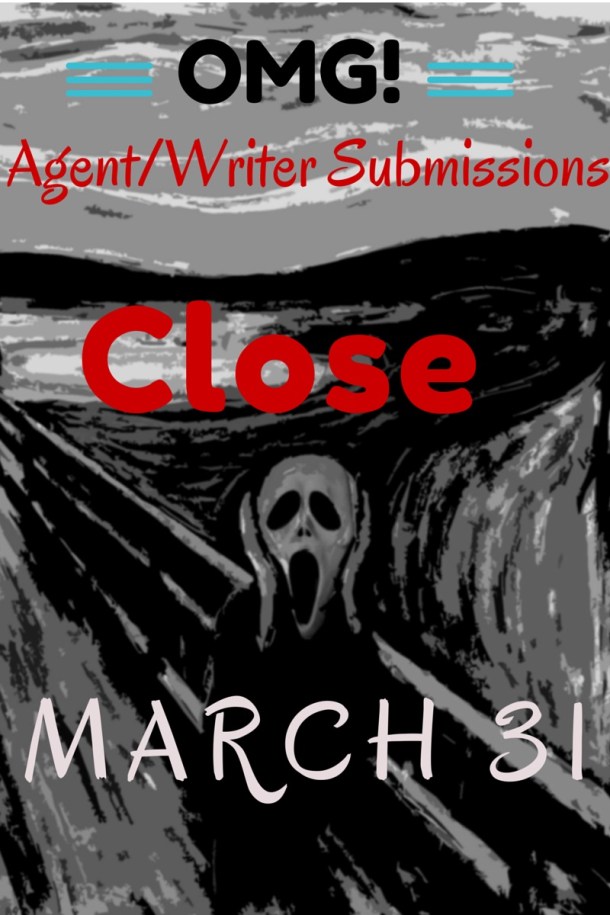
Submission guidelines available here. Closing March 31.

See you at WriteFest.


CRUSH Cycle – words and music

As the scent of cane sugar rises rich and redolent in the October air and the chuff of cane trains rattle their way through our psyche it’s that time of the year  when Bundaberg celebrates.

Yes, The CRUSH festival is here again.

And this year the club will be doing a little cross-pollination of  creatives when music and words come together.

AlowishusWednesday1To start it all off with a bang, on Wednesday October 1, there will be the GREAT GELATO GROOVE at Alowishus Delicious. Register to get a free Gelato on the night.

Undercover Experience will be sharing their music, but also offering a chance to chat about music: about what makes them do what they do; what  they love (and hate) about music and, specially for writers, a little bit of insight into the wizardry that happens when words meet music in a brightly lit arcade in Bundaberg.

Good food. Good company. Good music.

Great Gelato.

FREE.

PS. Our main show is a lyrics writing workshop followed by a Jam session with Musos to the max guided by Carl and the guys from Bundy Live.
Sunday October 5, hosted by Carl Wockner, local lad and Scope Magazine’s Male solo Artist of the Year Acoustic and Vocals. Cost is $12.50. Register and pay on CRUSH Festival site. You’ll find more info there too.

Author’s Spring Murder Launch = Double Trouble

It’s Double Trouble, isn’t it, when two Sandys… err… Sandis err….  when two authors collaborate to launch their newest novels.

Joining our own Sandy Curtis and Sandi Wallace at Ballarat’s spring launch is Jane Clifton.  The authors are all part of the Clan Destine Press (Indie Publishing House with murder on its mind) stable.

This slideshow requires JavaScript.

10 qualities of successful authors

      1. WritingdownthebonesAmbition – Many of the best writers choose not to publish.
      2. Technical skills – this goes way beyond the basics of punctuation and grammar. Good basics equip a writer for report writing, not authorship.
      3. An eye for detail – writers look beyond the superficial.
      4. Their stories illuminate what isn’t spoken about. [Tweet this!]

      5. Creativity – making is craft. Making something out of nothing is creating. The first story in a successful series is creation, the stories that go with it are examples of craft driven by that first creative pulse.
      6. Tenacity – for the blue days, to get you through the days when creativity has flown, the grammar checker makes more sense than you do, and the people in your house want you back in their lives.
      7. Legal knowledge – enough to know the difference between libel and defamation, to realise that the law doesn’t give a fig about what a writer wants (relative to everybody else’s needs). And enough knowledge to understand what it is the law thinks the people need, just so you know which mark is their line in the sand.
      8. Networking skills – a writer cannot easily do it alone. Pick a network that suits you – offline and online – and make friends.
      9. Digital skills – technology is becoming simpler and simpler. A free iPad app can create a movie trailer using camera stills.
      10. Professional skills – authors have a career to grow and to manage. If you don’t have professional skills, they can be learned. Your creativity makes it an easy task.
      11. Marketing skills – see above. Authors are in charge of growing their career.

Kez Salaün

As Writefest rolls around for yet another year it becomes impossible not to face up to something I would like to pretend hadn’t happened. Not yet.

Our dear friend, companion in writing, colleague, fellow seeker of truth, wisdom, and a damn good time, Kez Salaün has passed away.

I met her at WriteFest 2013. Like many others she met that day, we became facebook buddies.

Kez joined the club. She was travelling back to help out at this year’s festival, but more than a once a year helper she became a constant in our online lives (she lived in Ettrick, NSW). We couldn’t often share physical space but, as a Bundaberg Club member,  she became part of the group invading (fairly literally) GenreCon 2013. There remain unfinished arguments about who exactly exhausted whom that weekend.

She was generous, empathetic, vivacious, curious, energising and enervating; a tiny spark in a universe made much emptier by her unexpected passing.


QWC Celebrates A State of Writing

QWC

Queensland Writers Centre has been supporting and promoting the art and business of writing for over 20 years! During the last two decades, QWC has engaged with over 1 million writers in Queensland.

In celebration of the wonderful literary culture in Queensland, QWC is hosting  an open festival, created and championed by individual writers, community groups, schools, libraries, and organisations.

Anyone passionate about writing, reading and ideas is encouraged to participate. Held from 7-13 October 2013, QWW aims to highlight the myriad of amazing writers, creative thinkers, readers and audiences that Queensland has to offer.

LIE CATCHER REVIEW by Reece McPherson

Have you ever manipulated the truth?

If yes, then your answer begs a more interesting, and slightly frightening question: Did your lie fool anyone?

Enter Dr David Craig, an expert in the field of covert operations (the art of concealment) and author of multiple academic articles. His passion for the craft makes him a real-life double-zero agent. Lies are used every day. Craig shows us how often we deceive ourselves, and others, in his book, Lie Catcher.

Lie Catcher is a labour of love that can teach you invaluable detection skills you can easily hone, even at home.

There are passages in the book that summarise critical points, and allow you to skip straight to the ‘good stuff’, but reading it sentence-by-sentence will leave one with no regrets. Every page was enlightening, and for a good while I thought I was a double-zero agent. Perhaps that’s why the book never left my hands.

Reading Lie Catcher is an incredibly fulfilling experience, allowing readers to restock their mental toolkits.

If you’re interested in taking charge of important decision-making, you’ll find the confidence to detect deceit an invaluable resource.

Friendships and lovers


Nikki Logan

Nikki Logan


Nikki Logan writes from the heart as all Harlequin Romance writers do, but Nikki is successful at it.

Set in Western Australia on an isolated beach with a stranded whale, FRIENDS FOREVER examines emotional conflict between a man and a woman who haven’t seen each other for ten years and have now come together to save the whale and a love they thought was long dead. Add in the complication of alcohol addiction and it makes an exciting story of love, anger, prejudice and emotional overdrive.


Sharon Rushton