Is there a difference between Landscape and Setting?

I think there is.

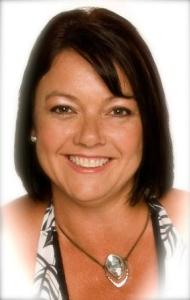
But what I think doesn’t matter. On May 21, BWC will be hosting T M Clark, a writer born in Zimbabwe, now calling Queensland home (having also lived in England) to help us understand how writers need to be Inspired by Landscape, rather than settle for using setting as an atmospheric backdrop.TMClark
Bookings are Essential through the Queensland Writers Centre.

As you can imagine, setting features strongly in TM Clark’s books, which are described as African Suspense. Some might think Tina Marie is ‘lucky’ to have first hand knowledge of a landscape we Australians probably consider exotic.

One point might be that we are all living our own exotic lifestyles. We just don’t notice any more.

The other point might be that Landscape is much more than a location, exotic or otherwise. Landscape isn’t a relief painted with broad brushstrokes. It’s not an accessory. It is the living world your characters find themselves in.

Elizabeth George, American Queen of Crime, a writer of mysteries set in England (you might know the Lynley Mysteries), has this to say in her book, Write Away.

On the surface, it would appear that landscape and setting are the same creatures, identical twins given different names just to confuse the beginning writer. This, however, would not be the truth since setting is where a story takes place–including where each scene takes place–while landscape is much broader than that…Landscape in writing implies much the same as that which is implied by the word when it’s used to refer to a location in a country: It is the broad vista into which the writer actually places the individual settings of the novel, sort of like the canvas or other medium onto which a painter has decided to daub color.

“You need to think about the landscape of your book because if you’re able to make the landscape of place real, you can make the land itself real, which gives you a leg up on making the entire novel real for the reader.”

If you want TM Clark’s take on the Inspiration Landscape can lend to your latest MS, make sure to book early.
Thoughts from the Back of the Room ~ Writing Tips We Love

A series of notes from Club Members:

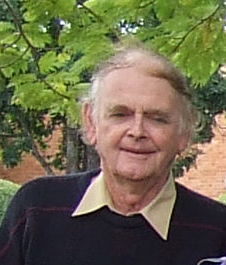
Angus Gresham wrote for many years before becoming a club member. Since then he’s passed through many stages of learning, including having to reframe what he thought was ‘only commonsense’.
Writing is something everybody does, but all wannabe authors need to learn how writers do it differently, often alone and sometimes in the middle of creative chaos.

Angus Gresham

During my five years membership of BWC I attended various workshops, lectures, seminars and tutorials – all directed at improving one’s writing skills. I would hang on every word from the presenters and furiously scribble down copious notes – every word uttered seemed so important at the time; I couldn’t risk missing out on any of the gems of wisdom raining down. My notes were taken home, carefully filed and then largely forgotten. As a result a huge, unwieldy and somewhat illegible pile of papers accumulated.

Angus GreshamFinally I decided to do something about it. I pored over the years of note-taking in an attempt to determine what was worth rescuing. Some valuable writing tips were discovered among the mountains of more or less irrelevant scrawlings. Quite a few tips (the better ones) had been repeated over and over by various presenters. Some advice completely contradicted other advice.

The following is a sample of what I found useful. There has been no attempt to list in order of importance. For some people all the information provided may be of equal importance; others will find only some of the tips helpful.

**********

  • Don’t write unless you like doing it for its own sake. It would be great to be published and make lots of money, but if money is the primary focus, you won’t find writing enjoyable.
  • Read a lot, particularly in your chosen genre. When you read a good book, analyse what you like about it, and determine how you can use its positive elements in your own book.
  • Make notes, and plan months ahead of when you actually start the book.
  • You can use a working title which can be changed by you or your publisher at a later date.
  • One should only write for oneself, or for strangers; never for a set audience or family.
  • You’ve got to be happy with what you write. Do numerous drafts if necessary. Edit as much as you like.
  • First paragraph is crucial. You must hook readers from the very beginning. The real meaning of the first paragraph can be explained over the rest of the book. Conflict should start on page one.
  • End each chapter with a little bit of mystery, or even some excitement. This will ensure the reader keeps on reading to see what happens next.
  • Do emotions first, and structure last. You must feel compassion with, and become a part of, the characters. The reader should be able to identify with the characters and become emotionally engaged. Readers have to care about the characters – but they don’t necessarily have to like them.
  • Be aware of pace. Keep the pace moving. Delete all (or most) adverbs in your draft. This allows the story to flow much faster thus maintaining reader interest.
  • It’s OK to have short paragraphs; they give the reader breathing space. It’s OK to have short chapters; they give the reader a break.
  • Use internet research. It is much quicker than traditional library research. It may not be 100% accurate, but most of your readers are not experts on the subject you are writing about. The overriding importance is to tell a good, but believable, story. Wikipedia has a great overview on any topic.
  • Use your professional knowledge and life experience in your writing. Write about what you know. This saves having to do a lot of research.
  • Put your story away for a couple of months and then read it as if it’s someone else’s work. Does the story grab your attention and hold it through-out?
  • Read your story aloud. This will reveal any longwinded or awkward sentences.

Finally, you have to work out the system that works best for you.


It’s All Good for Today’s Authors

Which ever way you intend to publish –Justin_Sheedy
*Indie
*Self
*Trad
Whether e-books have peaked and readers really are re-committing to paper –

No matter what your publishing route, it’s all good news for today’s author.  The reading world is your oyster, assuming you have the tools to crack it.

Meet Justin Sheedy.

He knows his oysters, and he’s either built, borrowed or taught himself the tools he needs to get his words out to the world.

As he says, ‘I’ve gone solo, and am still flapping my wings.’ As publishing models continue to change, he’ll have to keep flapping, and we’ll all be there with him.

Justin’s wing flapping has seen him host six sell-out book-signings during 2015, including his last for the year at Dymocks George Street, Sydney (arguably Australia’s Premier Bookstore) with more event planning underway in 2016.

His first book, Goodbye Crackernight (2009), failed to interest publishers – it’s a memoir – yet Justin continues to secure feature spots in broadcast media, most recently  on 7 News Sydney and Radio 2UE.

He’s currently 60% through his fifth book, No Greater Love, Part Three of an Australian historical fiction trilogy begun in 2012 with Nor the Years Condemn, followed by Ghosts of Empire (2013).

He’ll share what he’s learnt at WriteFest 2016

Lovin’ & Genre Fiction

I’m not deep into the romance genre but I have to admit all my favourite reads contain aspects of romance – all the way from Homer to Lord of the Rings to the Jack Reacher novels of Lee Child.

Here I was thinking all I needed to do was master the art of the chilling clue or the perfect sword thrust when the unavoidable conclusion is that appropriate lovin’ also needs to be attempted.

Homer’s romances were responses to lust or to loyalty; Middle Earth’s  love affairs burned bright, but were seldom spoken of; Jack Reacher enjoys the meeting of physicalities driven by the practical requirements of ‘no baggage’.

One type of romantic interlude does not suit all and I’m hoping that at WriteFest 2016, to be held this year in October, Rachael Johns will be able to give this romance klutz some insights into creating an (appropriately weighted) romantic buzz between characters.

Rachael-Johns-high-resolution-195x220

Rachael Johns

Rachael is an English teacher by trade, a mum,  an arachnophobe and a writer the rest of the time. Her greatest reading loves are for romance and women’s fiction.

She has 15 published books to her name, including both digital first novellas and traditionally published novels. She writes as she reads, in the genres of rural romance, contemporary romance and women’s fiction. 

Rachael has a Bachelor of Arts (Honours) in Writing/English and a Graduate Diploma in secondary education. She teaches high school English and Drama, she has presented a wide variety of workshops, for example, at KSP Writers Centre and the Clare Writers Festival, and now at WRITEFEST.

Check out 2016

Late 2105 release from Queensland Writers Centre:

  • Books from our Backyard – for the fourth year, a catalogue of books published as advised by Queensland authors.
  • Programme, January -June. Check out the online courses. Be aware, if the fees are daunting, grants are available (try RADF [Regional Arts Development Fund] or local councils) for professional development.


International Novel Writing Month

NaNoWriMo

November for writers, well, at least this writer, means NaNoWriMo. The time to go for broke, to put as many words on paper or monitor, or scratch on paperbark, that you can.

(Special note from Editor: Writers don’t have to sign up to be part of NaNoWriMo. All they have to do is write.)

For me, NaNoWriMo started a few days earlier, or rather, the set up did.

Five years ago I began a story, but soon became bored with it. So I started another, and another after that. I had so many characters clamouring for their story to be told, the poor first story slunk into the corner and sucked its thumb, sad and depressed that it had been forgotten.

Had I forgotten it? No, but other stories came before it. I still didn’t have the right idea of where the story needed to go, what twists or turns would it have?

Two NanoWriMos came and went. Entangled Destinies was the product of them.

I knew this year would be my forgotten word child’s turn. I would either finish it or come damn close. I sat down at the keyboard and nutted out fifteen chapters and one Epilogue. Yes, happy with what I’d semi-plotted, I waited for November to begin.

Blueeyed-cat

Cat-ch me if you can

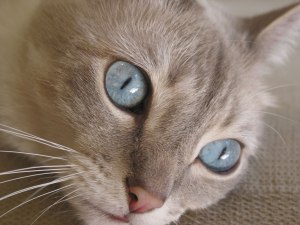
The first day dawned. I found slumber had not come easily to me the night before. Plots and sub plots ran through my mind, giving me some extremely weird dreams where my cat, Pookie, spoke to me. That was it, I had to get the words out, the time had come, but first I had to contend with a day’s work.

Work over, I hurried to my trusty computer, kicked up the gizmo inside that makes it work, and waited, fingers paused over the keyboard, itching to get the words buzzing in my brain out where they belonged.

That first day, I typed 1808 words. Not a lot, but it got me off the mark and it was more than the 1669 required per day. Over the next twenty-five days my word count fluctuated between 549 and 3889. Some days the words didn’t want to come. However, all the headaches, scratchy eyes and frustration ended on the 26th when I completed the 50,000 words.

Is the story finished? Not yet, but it doesn’t need to hide for another year or more. The end is in sight, as long as all characters decide to play nice, and do what I want them to do.

On another note, November also saw me turn another year older and launch my 107,000+ word novel Entangled Destinies at the Gin Gin Courthouse Gallery.


Death is Peace. Life is Love

Skulls


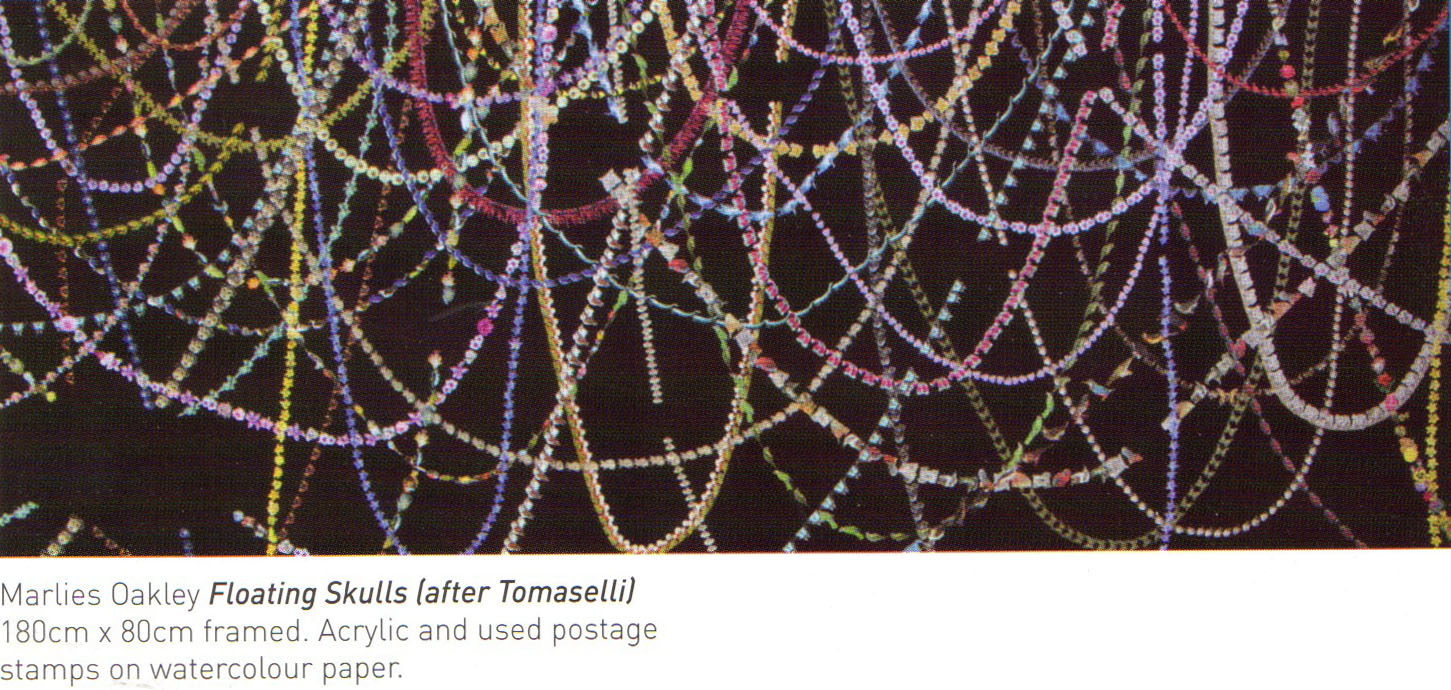
Beneath the garlanded stamps, invisible if you don’t stop to see, are the skulls. Long dead. Dinosaurs. Witnessed only through the absence they make, catching an eye, so you must stop. And see.

~ Di Esmond

Having just completed a course of Identifying the Dead and currently reading Forensics by Val MDermid, the word ‘skulls’ sent my mind to thoughts of death.

~ Lorraine Heyes

Requiem

The breakers pound against the rocks
‘Neath grassy slopes, white horses play
And I will steer by Southern Star
As shadows lengthen at close of day.

Beyond the dawn of spangled skies,
Through the mists of death’s dark veil
By moonlight I will come to you
On ghostly ship with silver sail.

Without the mists and moods of time
I feel you wait with ice cold breath
And watch me toss on troubled seas
With steel blue eyes in pools of death.

But there’s a time outside of time
Where death is peace and life is love
And though Hades gate should bar the way
Someday my soul will soar above

Mysterious Way of the Spirit

Retablo

Coyote speaks to Mary#3

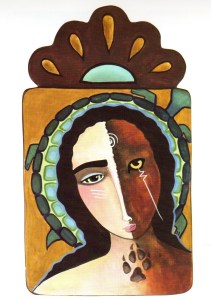
Virginia Maria Romero’s devotional retablos feature a person with the footprint of a wolf on their throat in one, and a person with a wolf beside them in another. To me they speak of the connection with the land and the animals that we once had, but many have lost.

When I first discovered the retablos my mind linked to the word wolf. Although I soon discovered the animal was a coyote, I felt strongly about the wolf, and so I stayed true to my initial impression of the retablos and wrote Brother Wolf.

~ Laree Chapman

Brother Wolf

We were brothers together, fur and tooth
At home in the red desert sand.
We tracked the prints of truth, of truth
Shared its scent, my brother, my wolf, my wolf

Our slow lope ate the miles away
We bayed as we hunted tomorrow.
We fled the pain of yesterday
And its turquoise tears of sorrow.

But I left the desert, the blood we shared,
For lights and a city’s desires.
Now the trail is cold, the red sand bare
As I scry in the man made fires.

Where was the truth, brother? Where was the truth?
Was it there in the lay of the land?
Or the moments between the heartbeats we shared
And the pulse of the hot red sand?

I know the truth, brother. I know the truth.
Too young to understand
I lost my friend, my brother, my wolf,
For a life in an alien land.
And the ripped blue sky as it tumbles down
Leaves me chilled and trembling still
Yet I find his tracks in the sand ahead
And at midnight I hear his call.

At midnight I hear my brother’s call.
Yes, at midnight I answer his call.

Some people thrive at boarding school. I did not. I felt I had been wrenched from my family, my farm and the animals I loved most, our sheep dogs. To a child once free to roam across thousands of acres alongside two or three dogs, the convent school’s tightly packed dormitories and concrete borders seemed like a jail on foreign soil. I returned home on holidays to find school friends saw me as different to them. They were secure in the knowledge that they would be there forever; I would always be leaving. It left me in a void. And so I had one foot in the past and one foot in the present. But always, my loving sheepdogs were my connection.

On seeing an art work

And then I stop and stare.

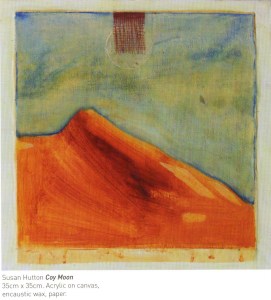
There is a painting above the old fireplace. I don’t know what it is but it seems to be something made especially for me. It is a muted landscape and at the top is a shining gold sun. Some of the gold seems to have worn off, giving the sun a distressed look. The sun is poking into the border of the painting, which isn’t framed.

coymoonI stand and stare.

There is a good chance that my mouth is gaping wide open. I’m having trouble breathing and my heart is thumping hugely. I keep standing there staring.

After a while I look around and realize that everyone is nearby too busy eating drinking and talking to pay much attention to me. That’s fortunate because I must look really dumb.
I look away from the painting. I look back. I can’t help it. I seem to need to keep looking at this beautiful thing. I understand it. It is speaking to me. I have no idea what it is saying but still I understand it. This is really stupid, but I can’t stop looking.
I feel someone standing close beside me. I look and it’s Avril.

“You seem to be enjoying the art,” she says.
At first my voice doesn’t work. I close my open mouth and I open it again in an attempt to speak like some demented goldfish. “That painting, it’s beautiful.”
“Yes, it’s only small, but I like it too. It’s made by painting with beeswax, with the color in the wax.”
“Small but perfect. It’s amazing. I need to buy it. How do I buy it?”

This painting could not be expressed in poetry. I have never found that to be the case before. I ventured into the scary (for me) area of prose and plotting and it became the inspiration for a novel. Girl meets boy artist, who is a Las Cruces nice guy over here as part of the exchange — not the actual artist, Susan Hutton, as I have taken some licence with the facts. 

~ Jan Sullivan


Blue Sky Talkin’

   #Blueskytalkin'FB copy CRUSH FESTIVAL FINALE

During the final days of CRUSH, club members were privileged to be given an opportunity to stand back and really look at the place we call home.

Thanks to the Bundaberg Regional Art Gallery, we had our own little part to play in their Wide Bay High Desert II Exhibition, an international exchange project between two countries involving twelve artists responding to the unique culture and landscapes of the Wide Bay in Queensland and the High Deserts of New Mexico.

Club members added an extra dimension with their words, and a little music.

First words to Vance Palmer

Back in the day, one of Australia’s most respected wordsmiths, Vance Palmer, was born (1885) in Bundaberg. He spent his early years here before being educated in small towns across Queensland – his father was a teacher. After that, Vance travelled the world learning his writing craft. He’s known for his poetry and essays, and for his journalism, but wasn’t against writing pot-boilers (eighty-one during a nine month stint in London), serials and music-hall sketches.

He was in France when the First World War broke out, and came back to Queensland. He said of the country: 

Beyond the horizon, or even the knowledge, of the cities along the coast, a great, creative impulse is at work — the only thing, after all, that gives this continent meaning and a guarantee of the future. Every Australian ought to climb up here, once in a way, and glimpse the various, manifold life of which he is a part.

And of Bundaberg:

By night Bundaberg reminds one of a coastal town in the Southern States of America, the wide streets, with their heavy foliaged trees the smell of tropical fruit in the air, the sense of open doors and windows-all these things suggest Carolina.

There is a faint restlessness abroad. Voices echo dimly from shadowy verandas and balconies and there are the thousand little sounds and movements that speak of heat.

So what is it about Bundaberg and the Wide Bay…

Lizard1FB

A curved stick in the middle of the road moves to become a live being. In another time the goanna could have been king on his world without any fear.

Red sand blowing creates new
blue haze laying above the tree tops
sand scraping against itself
leaves rustling into gullies.
The scent of sandy wind meets the aromas of the bush.

~ Jenny Addicoat


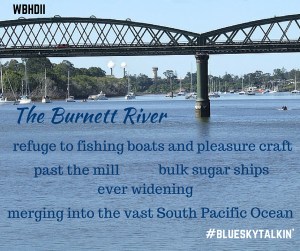
RiverFBThe slow, deep, muddy river approaches the city from the west, widening into a respectable, significant waterway traversed by long, important, busy bridges – both rail and road.
It skirts the CBD, refuge for fishing boats and pleasure craft, moving on past the mill – ever-widening as it reaches the port, the large bulk sugar ships and over-crowded marina.

Ever widening, still muddy, on it goes until at last the river merges, disappears, in the vast South Pacific Ocean.

~ Angus Gresham


Coral seaFB
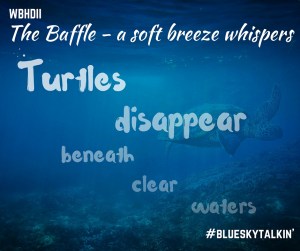
The soft breeze coming off the Coral Sea whispers through the leaves of the majestic she-oaks.

A turtle raises its head and takes a gulp of air, letting out a whoosihng sound that seems to reply to the oaks, and then disappears beneath the clear waters of the Baffle.

It’s calm waters gather momentum as the Baffle reaches out through the estuary mouth and tumbles headlong into the mighty ocean.

~ Lorraine Heyes


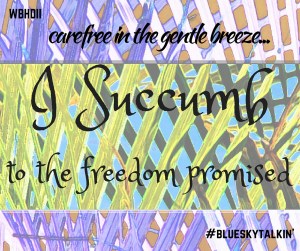
Cane green against a blue sky. PalmsFB

Perfect tips flop, carefree in the gentle breeze, and thrash, wilding, in the wind.

I succumb, like an addict, to the freedom it promises.

Skimming. Ducking. Diving. I glide inside my imagination.

I see across the breadth of the earth, feeling the desert heat before the sea envelopes me in its coolness.

~ JenLi