Balancing Comfort and Crisis

WordPress Ai

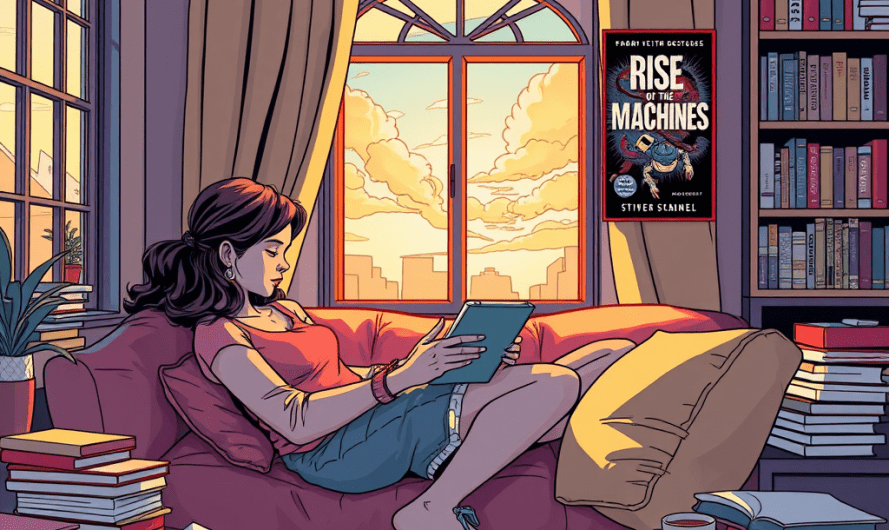
A shift is emerging in the genres. Some readers are seeking stories that prioritise comfort over conflict, seeking an escape, they say, from real-world stress – something they don’t get from tension-driven narratives.

Do the rise of cosy romance, the cosy mystery or the cosy fantasy suggest a trend? Are “no or low conflict” stories even possible? Are these requests for ‘no conflict’ prompted by something else?

Or is the term “conflict” the actual issue?

Readers are reporting being frustrated by traditional storytelling that ‘demands’ escalating tension and a third act crisis. This form of reader dissatisfaction might explain why “low conflict” is gaining a following. Think about it. perhaps writing a ‘low conflict’ story doesn’t require getting rid of every challenge a character faces. Perhaps writing a cosy does require the writer avoiding predictable and inorganic problems. Perhaps, ticking the boxes is not enough, especially if done carelessly.

Many readers equate the term, ‘conflict’, with high-stakes drama, acts of betrayal, that third-act ‘dark night of the soul’. But does that automatically mean our readers reject all forms of tension? Or are they rejecting characters suffering unfounded foreboding or baseless differences of opinion?

How many times can you recognise a trope unfolding without thinking: Not this again!

The Appeal of Low Stakes

Low stakes stories seem to opt for greater emotional resonance and a character-driven storytelling rather than plot twists. The stories focus on small, everyday moments. For readers who prefer comfort reads, the appeal is obvious.

Characters face challenges that feel proportionate and authentic rather than contrived or catastrophic.

At the same time, cozy mysteries still contain suspense, although it’s lighthearted. Cozy fantasy prioritises atmosphere over high-stakes adventure – hobbits’ hairy feet and elderberry wine rather than a clash of swords. Or of hearts.

A Story Without Conflict? Nah.

The biggest challenge for writers thinking to embrace the cosy has to be maintaining their balance.

Conflict remains the engine of storytelling—it’s what makes readers turn the page. Even low-stakes needs questions to create narrative momentum.  If every problem resolves too early, what is there to keep the story going?

“Conflict-free” stories risk feeling aimless. Characters meet half way through chapter one. After couple of chapters of mild social jockeying they become friends. They buy a pub together a couple of chapters later and in their spare time go on occasional hikes in the hills! This will be a pleasant experience for some. Others will find it dull.

You can’t get no Satisfaction?

The truth about trends, particularly this one, is obvious.

Some readers crave tension, excitement, while others seek warmth. Dark stories full of righteous anger, betrayal, and redemption remain popular, proving many readers continue to relish conflicted characters. And an occasional clash of swords. At the same time, cozy, slice-of-life mystery, romance and fantasy are flourishing, offering a different kind of satisfaction.

Trends are like fashion—some stick around, while others are best forgotten as quickly as last year’s miso soup craze. But if the thought of snuggling into “cosy” vibes does tickle your fancy, then aim to spice up your characterisation. Turn that bland setting into a plush wonderland that even a cat would envy! Remember to sprinkle in some atmosphere. I mean who doesn’t love lounging in their pajamas while engaging in daily rituals like 12-hour streaming binges?

Aim less for ‘what happens next’ and more towards ‘I am never leaving this world’.
That’s Not Tinnitus, That’s My Characters Talking In My Head…

Let’s face it. Writing can be a lonely job, even when you’re an introvert. While extraverts are off playing golf, meeting for coffee and cake or, heaven forbid, singing karaoke, we writers are crouched over our laptops, trying to transpose those voices from our heads onto the page and ultimately into a book. Yes, writing is something we must do in solitude.

Usually.

But, there is a place where we introverts can shine.

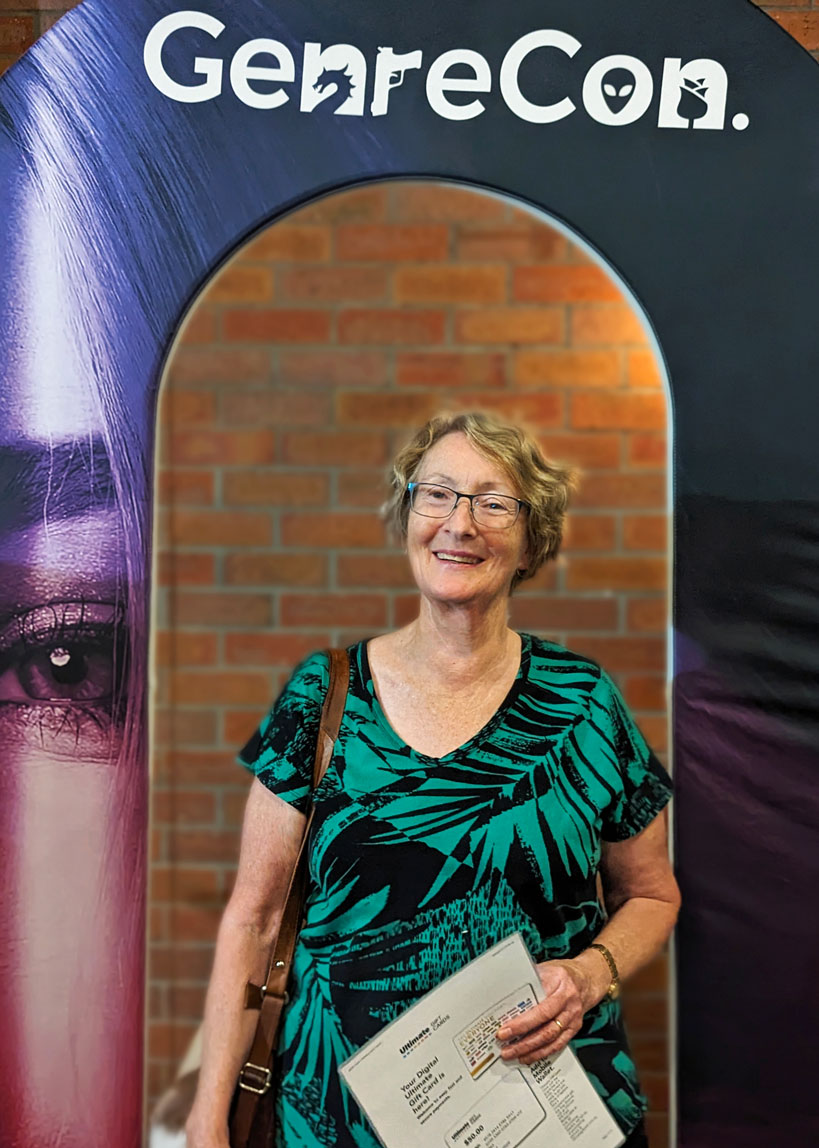
GenreCon is a place to hang with your tribe, soak up the words of successful authors, editors and publishers, and discuss ideas with people who already know about those voices in your head, because they have them, too.

Yes, once a year, writers can come together in the joyous celebration that is GenreCon. And yes, your heart should give a little flutter when you read the word, just like mine did when I typed it. And here is why: Every February the Queensland Writers Centre hosts a writing conference that brings local, interstate and international authors together at the State Library of Queensland. And it’s all achieved by the tireless work of the Queensland Writers Centre. How they manage to create such a miracle, I have no idea. I can’t even organise a chook raffle in a pub!
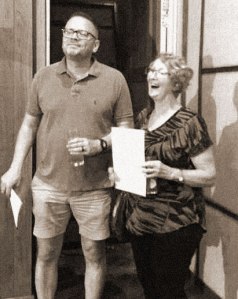
I’ve been to several GenreCons, and always come away bubbling with excitement, new stories leaping onto the pages of my notebook, more stories queueing in a disorderly fashion and squabbling to be put down on the page first. Honestly, I wish I’d never given up shorthand at school. This year’s GC, though, was almost like a roller coaster ride for me. It began when I won the GenreCon Short Story Award, and my story Smooth was read out by none other than the keynote speaker, Patrick Ness, a brilliant YA, Children’s and Adult writer and scriptwriter (think Dr Who). Now, winning was enough of a surprise, and for Patrick to read my story out on the launch night was sublime, but I even managed a few minutes chat with him afterwards.

Rubbing shoulders with internationally famous authors? Yes, anything is possible when you attend GenreCon. But wait, there’s more. Much, much more. But, you knew that already, didn’t you?
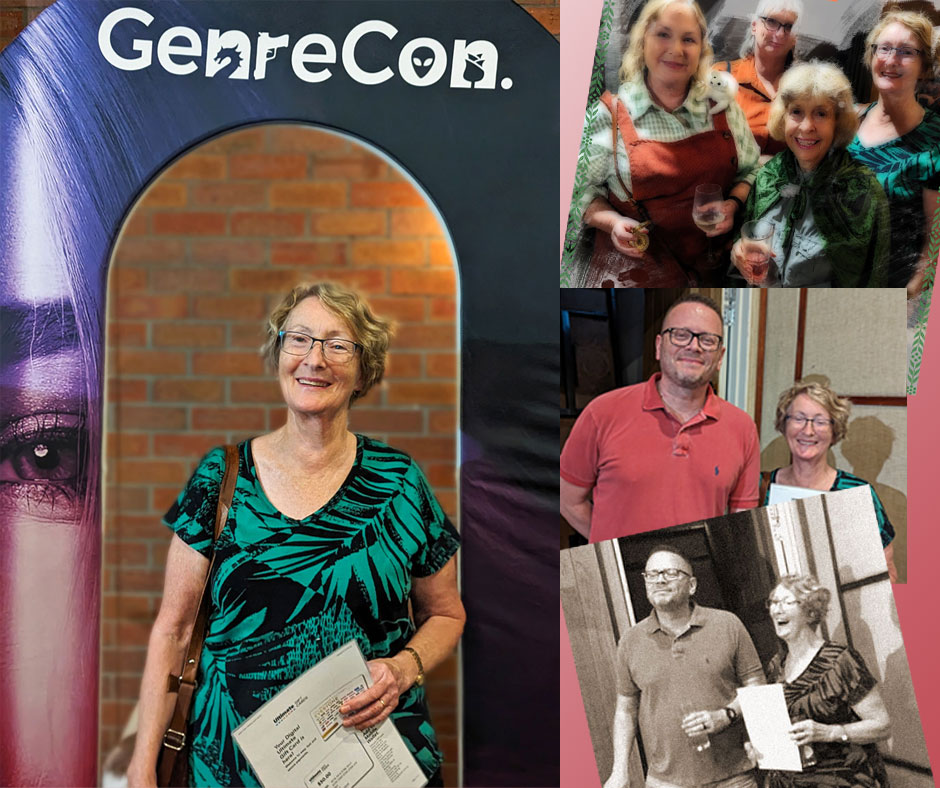
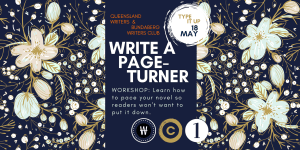
Being a writer of contemporary crime, historical crime and fantasy, I found the hardest thing about the three-day weekend was choosing whose workshop or panel to attend. Friday was a full-day workshop with Nick Earls on the Novella, and, with the novella’s recent rise in popularity, I jumped at the chance. I’m now halfway through writing two novellas. I told you GenreCon was inspiring. Saturday and Sunday were full of panels filled with authors, editors and publishers giving us their insights on new trends in publishing, as well as workshops on crime writing, sci-fi writing and getting into your villain’s head, to name a few.

There were talks on the craft of writing, how to write the crucial synopsis and cover letter, and a session on PR. Yes, an ugly word to many writers, but a necessary evil if we want to promote our product – our writing. Authors generously took us through their writing habits, how they created characters and plotlines, why they were driven to write these stories, and their experiences on their journey to publication. Julie Janson’s two-hour workshop on creating a crime novel was not to be missed.

I can see how my time at GenreCon has informed my most recent writing. Not only am I enthused to write more but I see an improvement in my writing itself. It’s more polished, more directed, I am able to clearly define my story’s plot-lines, my character’s arc, paring away the superfluous right down to the bones to build stronger prose.

I have the knowledge to direct my manuscripts to editors and publishers and give them my very best writing. I now have the skills to craft a tight synopsis and cover letter to accompany my manuscript to the publishers. And after a chat with a publishing house at GenreCon, my manuscript was requested for them to read. This particular pairing would not have happened except for GenreCon.

GenreCon is a long weekend where writers can learn, meet other writers and drink from the well of inspiration that only comes from writers gathering together and sharing their thoughts. Even little introverts like you and I can shine…and then escape back into our natural environment – the study, crouched over our laptops, wrapping the skin and bones around those voices in our heads.

Laree Chapman

I am extremely grateful to the Regional Arts Development Fund (RADF) for awarding me a Quick Response Grant to attend GenreCon 2024 in Brisbane. Their foresight in granting artists (and I include writers as artists) funding to help them attend festivals, events and workshops is greatly appreciated.

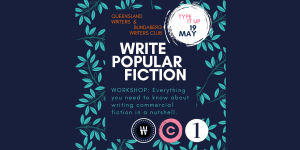
Coming to Bundaberg: How to Write Popular Fiction


Queensland Writers Centre and Bundaberg Writers Club will be hosting a two day workshop covering the A-Z of Writing Popular Fiction.

These interactive workshops suit beginners and emerging authors, or experienced writers who feel they need to refine their technique.

Venue: BWC Meeting Rooms, 80A Woongarra Street, Bundaberg Central.


On Saturday, May 18

10.30am – 4.30pm

Learn how to pace your novel so that a reader won’t want to put it down.

Develop and  improve your writing skill-set through practical exercises and group discussion.

  • Create compelling hooks and story questions
  • understand the different pacing required in different genres
  • understand pacing needs to vary within a novel
  • learn how to slow or speed the pace of your story
  • recognise the boring bits, and have the courage to leave them out
  • learn how to ratchet up the tension in each page
  • understand how structure affects pacing

Book Now

On Sunday, May 19

10.00am – 4.00pm

Everything you need to know about writing commercial fiction, in a nutshell

Explore key areas using practical exercises.

  • how to generate ideas and turn those ideas into a workable premise
  • investigate voice, and how voice relates to genre
  • Understand conflict, and how it generates plot
  • What is ‘classic story structure’?
  • Learn to develop a framework for your story
  • Learn about character arcs and how to show character growth and change.
  • Understand the commercial fiction market and pathways to publication


Book Now

Short Story 2016 Update

Meg Vann

Meg Vann

Meg Vann has agreed to be our final judge this year. She says she reads too much – loves crime and thrillers – eats too well, and is perpetually ready for adventure, which is undoubtedly why she is taking on our short list, which this year numbers eight.

For writers who may not yet be familiar with Meg Vann, she was for many years a core member of the Queensland Writers Centre, taking on the role of Chief Executive Officer for three of those years but always, always, always encouraging writers to dream of growing sustainable careers; to be valued and respected and enjoyed.

Meg is a writer, a digital experimenter, writing tutor, lecturer (now at University of Queensland) while studying criminology at Griffith, and convenor of Sisters in Crime (Brisbane Chapter).

We expect that we’ll be finalising the winner and runner-up by mid May, 2016, at the latest.

Good Luck to our final eight.


Is there a difference between Landscape and Setting?

I think there is.

But what I think doesn’t matter. On May 21, BWC will be hosting T M Clark, a writer born in Zimbabwe, now calling Queensland home (having also lived in England) to help us understand how writers need to be Inspired by Landscape, rather than settle for using setting as an atmospheric backdrop.TMClark

Bookings are Essential through the Queensland Writers Centre.

As you can imagine, setting features strongly in TM Clark’s books, which are described as African Suspense. Some might think Tina Marie is ‘lucky’ to have first hand knowledge of a landscape we Australians probably consider exotic.

One point might be that we are all living our own exotic lifestyles. We just don’t notice any more.

The other point might be that Landscape is much more than a location, exotic or otherwise. Landscape isn’t a relief painted with broad brushstrokes. It’s not an accessory. It is the living world your characters find themselves in.

Elizabeth George, American Queen of Crime, a writer of mysteries set in England (you might know the Lynley Mysteries), has this to say in her book, Write Away.

On the surface, it would appear that landscape and setting are the same creatures, identical twins given different names just to confuse the beginning writer. This, however, would not be the truth since setting is where a story takes place–including where each scene takes place–while landscape is much broader than that…Landscape in writing implies much the same as that which is implied by the word when it’s used to refer to a location in a country: It is the broad vista into which the writer actually places the individual settings of the novel, sort of like the canvas or other medium onto which a painter has decided to daub color.

“You need to think about the landscape of your book because if you’re able to make the landscape of place real, you can make the land itself real, which gives you a leg up on making the entire novel real for the reader.”

If you want TM Clark’s take on the Inspiration Landscape can lend to your latest MS, make sure to book early.

It’s All Good for Today’s Authors

Which ever way you intend to publish –Justin_Sheedy
*Indie
*Self
*Trad
Whether e-books have peaked and readers really are re-committing to paper –

No matter what your publishing route, it’s all good news for today’s author.  The reading world is your oyster, assuming you have the tools to crack it.

Meet Justin Sheedy.

He knows his oysters, and he’s either built, borrowed or taught himself the tools he needs to get his words out to the world.

As he says, ‘I’ve gone solo, and am still flapping my wings.’ As publishing models continue to change, he’ll have to keep flapping, and we’ll all be there with him.

Justin’s wing flapping has seen him host six sell-out book-signings during 2015, including his last for the year at Dymocks George Street, Sydney (arguably Australia’s Premier Bookstore) with more event planning underway in 2016.

His first book, Goodbye Crackernight (2009), failed to interest publishers – it’s a memoir – yet Justin continues to secure feature spots in broadcast media, most recently  on 7 News Sydney and Radio 2UE.

He’s currently 60% through his fifth book, No Greater Love, Part Three of an Australian historical fiction trilogy begun in 2012 with Nor the Years Condemn, followed by Ghosts of Empire (2013).

He’ll share what he’s learnt at WriteFest 2016

Lovin’ & Genre Fiction

I’m not deep into the romance genre but I have to admit all my favourite reads contain aspects of romance – all the way from Homer to Lord of the Rings to the Jack Reacher novels of Lee Child.

Here I was thinking all I needed to do was master the art of the chilling clue or the perfect sword thrust when the unavoidable conclusion is that appropriate lovin’ also needs to be attempted.

Homer’s romances were responses to lust or to loyalty; Middle Earth’s  love affairs burned bright, but were seldom spoken of; Jack Reacher enjoys the meeting of physicalities driven by the practical requirements of ‘no baggage’.

One type of romantic interlude does not suit all and I’m hoping that at WriteFest 2016, to be held this year in October, Rachael Johns will be able to give this romance klutz some insights into creating an (appropriately weighted) romantic buzz between characters.

Rachael-Johns-high-resolution-195x220

Rachael Johns

Rachael is an English teacher by trade, a mum,  an arachnophobe and a writer the rest of the time. Her greatest reading loves are for romance and women’s fiction.

She has 15 published books to her name, including both digital first novellas and traditionally published novels. She writes as she reads, in the genres of rural romance, contemporary romance and women’s fiction. 

Rachael has a Bachelor of Arts (Honours) in Writing/English and a Graduate Diploma in secondary education. She teaches high school English and Drama, she has presented a wide variety of workshops, for example, at KSP Writers Centre and the Clare Writers Festival, and now at WRITEFEST.

Death is Peace. Life is Love

Skulls


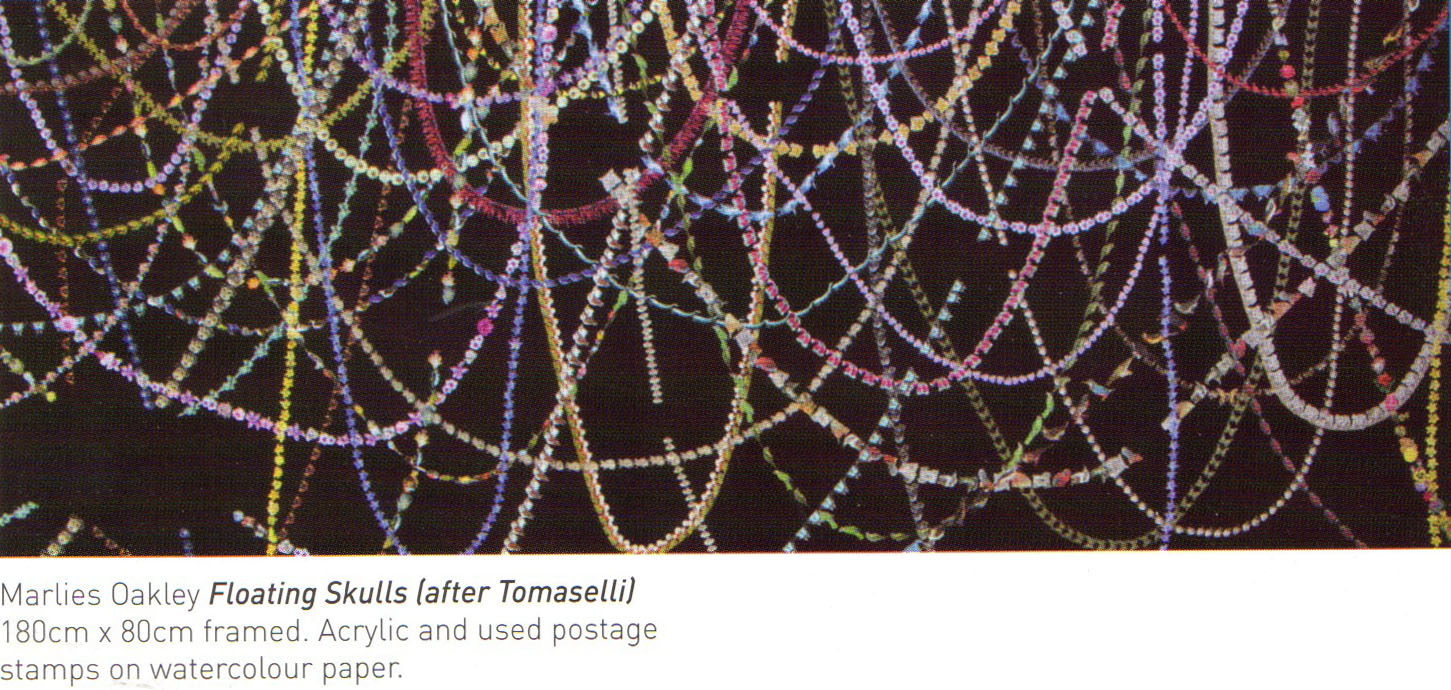
Beneath the garlanded stamps, invisible if you don’t stop to see, are the skulls. Long dead. Dinosaurs. Witnessed only through the absence they make, catching an eye, so you must stop. And see.

~ Di Esmond

Having just completed a course of Identifying the Dead and currently reading Forensics by Val MDermid, the word ‘skulls’ sent my mind to thoughts of death.

~ Lorraine Heyes

Requiem

The breakers pound against the rocks
‘Neath grassy slopes, white horses play
And I will steer by Southern Star
As shadows lengthen at close of day.

Beyond the dawn of spangled skies,
Through the mists of death’s dark veil
By moonlight I will come to you
On ghostly ship with silver sail.

Without the mists and moods of time
I feel you wait with ice cold breath
And watch me toss on troubled seas
With steel blue eyes in pools of death.

But there’s a time outside of time
Where death is peace and life is love
And though Hades gate should bar the way
Someday my soul will soar above

On seeing an art work

And then I stop and stare.

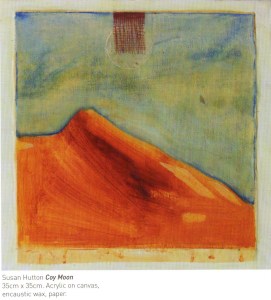
There is a painting above the old fireplace. I don’t know what it is but it seems to be something made especially for me. It is a muted landscape and at the top is a shining gold sun. Some of the gold seems to have worn off, giving the sun a distressed look. The sun is poking into the border of the painting, which isn’t framed.

coymoonI stand and stare.

There is a good chance that my mouth is gaping wide open. I’m having trouble breathing and my heart is thumping hugely. I keep standing there staring.

After a while I look around and realize that everyone is nearby too busy eating drinking and talking to pay much attention to me. That’s fortunate because I must look really dumb.
I look away from the painting. I look back. I can’t help it. I seem to need to keep looking at this beautiful thing. I understand it. It is speaking to me. I have no idea what it is saying but still I understand it. This is really stupid, but I can’t stop looking.
I feel someone standing close beside me. I look and it’s Avril.

“You seem to be enjoying the art,” she says.
At first my voice doesn’t work. I close my open mouth and I open it again in an attempt to speak like some demented goldfish. “That painting, it’s beautiful.”
“Yes, it’s only small, but I like it too. It’s made by painting with beeswax, with the color in the wax.”
“Small but perfect. It’s amazing. I need to buy it. How do I buy it?”

This painting could not be expressed in poetry. I have never found that to be the case before. I ventured into the scary (for me) area of prose and plotting and it became the inspiration for a novel. Girl meets boy artist, who is a Las Cruces nice guy over here as part of the exchange — not the actual artist, Susan Hutton, as I have taken some licence with the facts. 

~ Jan Sullivan


Blue Sky Talkin’

   #Blueskytalkin'FB copy CRUSH FESTIVAL FINALE

During the final days of CRUSH, club members were privileged to be given an opportunity to stand back and really look at the place we call home.

Thanks to the Bundaberg Regional Art Gallery, we had our own little part to play in their Wide Bay High Desert II Exhibition, an international exchange project between two countries involving twelve artists responding to the unique culture and landscapes of the Wide Bay in Queensland and the High Deserts of New Mexico.

Club members added an extra dimension with their words, and a little music.

First words to Vance Palmer

Back in the day, one of Australia’s most respected wordsmiths, Vance Palmer, was born (1885) in Bundaberg. He spent his early years here before being educated in small towns across Queensland – his father was a teacher. After that, Vance travelled the world learning his writing craft. He’s known for his poetry and essays, and for his journalism, but wasn’t against writing pot-boilers (eighty-one during a nine month stint in London), serials and music-hall sketches.

He was in France when the First World War broke out, and came back to Queensland. He said of the country: 

Beyond the horizon, or even the knowledge, of the cities along the coast, a great, creative impulse is at work — the only thing, after all, that gives this continent meaning and a guarantee of the future. Every Australian ought to climb up here, once in a way, and glimpse the various, manifold life of which he is a part.

And of Bundaberg:

By night Bundaberg reminds one of a coastal town in the Southern States of America, the wide streets, with their heavy foliaged trees the smell of tropical fruit in the air, the sense of open doors and windows-all these things suggest Carolina.

There is a faint restlessness abroad. Voices echo dimly from shadowy verandas and balconies and there are the thousand little sounds and movements that speak of heat.

So what is it about Bundaberg and the Wide Bay…

Lizard1FB

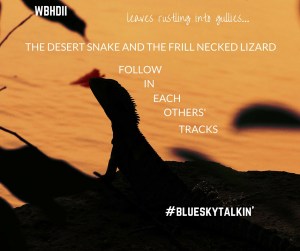
A curved stick in the middle of the road moves to become a live being. In another time the goanna could have been king on his world without any fear.

Red sand blowing creates new
blue haze laying above the tree tops
sand scraping against itself
leaves rustling into gullies.
The scent of sandy wind meets the aromas of the bush.

~ Jenny Addicoat


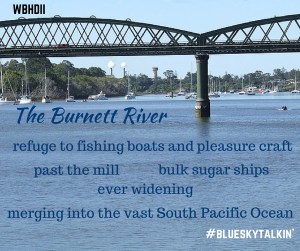
RiverFBThe slow, deep, muddy river approaches the city from the west, widening into a respectable, significant waterway traversed by long, important, busy bridges – both rail and road.
It skirts the CBD, refuge for fishing boats and pleasure craft, moving on past the mill – ever-widening as it reaches the port, the large bulk sugar ships and over-crowded marina.

Ever widening, still muddy, on it goes until at last the river merges, disappears, in the vast South Pacific Ocean.

~ Angus Gresham


Coral seaFB
The soft breeze coming off the Coral Sea whispers through the leaves of the majestic she-oaks.

A turtle raises its head and takes a gulp of air, letting out a whoosihng sound that seems to reply to the oaks, and then disappears beneath the clear waters of the Baffle.

It’s calm waters gather momentum as the Baffle reaches out through the estuary mouth and tumbles headlong into the mighty ocean.

~ Lorraine Heyes


Cane green against a blue sky. PalmsFB

Perfect tips flop, carefree in the gentle breeze, and thrash, wilding, in the wind.

I succumb, like an addict, to the freedom it promises.

Skimming. Ducking. Diving. I glide inside my imagination.

I see across the breadth of the earth, feeling the desert heat before the sea envelopes me in its coolness.

~ JenLi