Balancing Comfort and Crisis

WordPress Ai

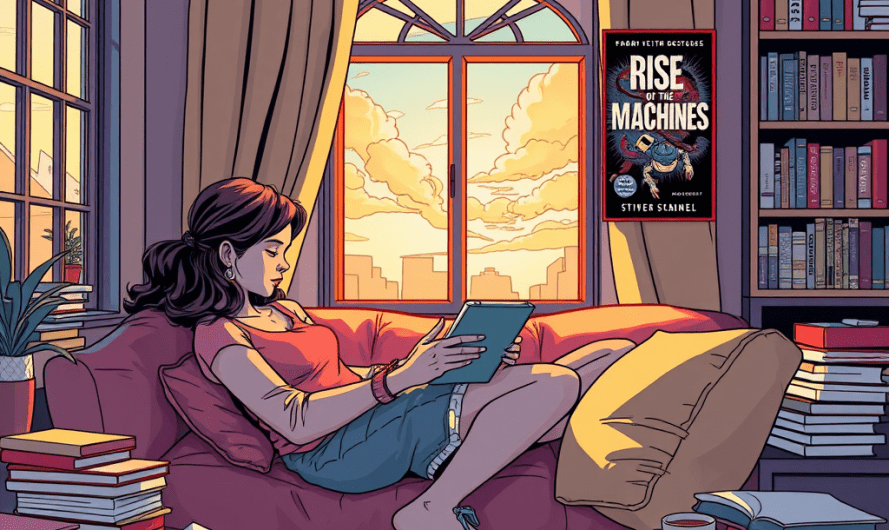
A shift is emerging in the genres. Some readers are seeking stories that prioritise comfort over conflict, seeking an escape, they say, from real-world stress – something they don’t get from tension-driven narratives.

Do the rise of cosy romance, the cosy mystery or the cosy fantasy suggest a trend? Are “no or low conflict” stories even possible? Are these requests for ‘no conflict’ prompted by something else?

Or is the term “conflict” the actual issue?

Readers are reporting being frustrated by traditional storytelling that ‘demands’ escalating tension and a third act crisis. This form of reader dissatisfaction might explain why “low conflict” is gaining a following. Think about it. perhaps writing a ‘low conflict’ story doesn’t require getting rid of every challenge a character faces. Perhaps writing a cosy does require the writer avoiding predictable and inorganic problems. Perhaps, ticking the boxes is not enough, especially if done carelessly.

Many readers equate the term, ‘conflict’, with high-stakes drama, acts of betrayal, that third-act ‘dark night of the soul’. But does that automatically mean our readers reject all forms of tension? Or are they rejecting characters suffering unfounded foreboding or baseless differences of opinion?

How many times can you recognise a trope unfolding without thinking: Not this again!

The Appeal of Low Stakes

Low stakes stories seem to opt for greater emotional resonance and a character-driven storytelling rather than plot twists. The stories focus on small, everyday moments. For readers who prefer comfort reads, the appeal is obvious.

Characters face challenges that feel proportionate and authentic rather than contrived or catastrophic.

At the same time, cozy mysteries still contain suspense, although it’s lighthearted. Cozy fantasy prioritises atmosphere over high-stakes adventure – hobbits’ hairy feet and elderberry wine rather than a clash of swords. Or of hearts.

A Story Without Conflict? Nah.

The biggest challenge for writers thinking to embrace the cosy has to be maintaining their balance.

Conflict remains the engine of storytelling—it’s what makes readers turn the page. Even low-stakes needs questions to create narrative momentum.  If every problem resolves too early, what is there to keep the story going?

“Conflict-free” stories risk feeling aimless. Characters meet half way through chapter one. After couple of chapters of mild social jockeying they become friends. They buy a pub together a couple of chapters later and in their spare time go on occasional hikes in the hills! This will be a pleasant experience for some. Others will find it dull.

You can’t get no Satisfaction?

The truth about trends, particularly this one, is obvious.

Some readers crave tension, excitement, while others seek warmth. Dark stories full of righteous anger, betrayal, and redemption remain popular, proving many readers continue to relish conflicted characters. And an occasional clash of swords. At the same time, cozy, slice-of-life mystery, romance and fantasy are flourishing, offering a different kind of satisfaction.

Trends are like fashion—some stick around, while others are best forgotten as quickly as last year’s miso soup craze. But if the thought of snuggling into “cosy” vibes does tickle your fancy, then aim to spice up your characterisation. Turn that bland setting into a plush wonderland that even a cat would envy! Remember to sprinkle in some atmosphere. I mean who doesn’t love lounging in their pajamas while engaging in daily rituals like 12-hour streaming binges?

Aim less for ‘what happens next’ and more towards ‘I am never leaving this world’.
That’s Not Tinnitus, That’s My Characters Talking In My Head…

Let’s face it. Writing can be a lonely job, even when you’re an introvert. While extraverts are off playing golf, meeting for coffee and cake or, heaven forbid, singing karaoke, we writers are crouched over our laptops, trying to transpose those voices from our heads onto the page and ultimately into a book. Yes, writing is something we must do in solitude.

Usually.

But, there is a place where we introverts can shine.

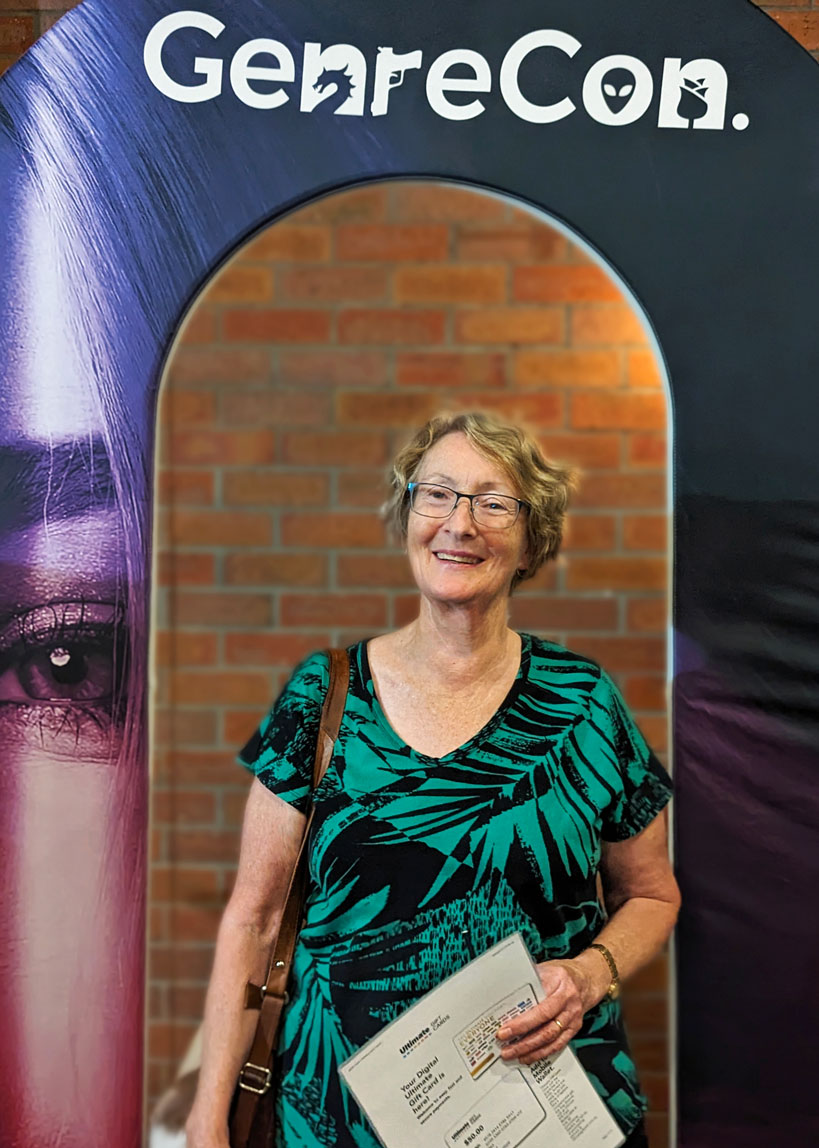
GenreCon is a place to hang with your tribe, soak up the words of successful authors, editors and publishers, and discuss ideas with people who already know about those voices in your head, because they have them, too.

Yes, once a year, writers can come together in the joyous celebration that is GenreCon. And yes, your heart should give a little flutter when you read the word, just like mine did when I typed it. And here is why: Every February the Queensland Writers Centre hosts a writing conference that brings local, interstate and international authors together at the State Library of Queensland. And it’s all achieved by the tireless work of the Queensland Writers Centre. How they manage to create such a miracle, I have no idea. I can’t even organise a chook raffle in a pub!
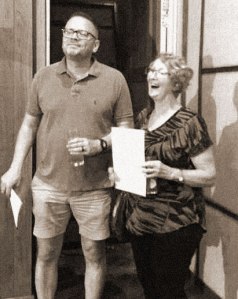
I’ve been to several GenreCons, and always come away bubbling with excitement, new stories leaping onto the pages of my notebook, more stories queueing in a disorderly fashion and squabbling to be put down on the page first. Honestly, I wish I’d never given up shorthand at school. This year’s GC, though, was almost like a roller coaster ride for me. It began when I won the GenreCon Short Story Award, and my story Smooth was read out by none other than the keynote speaker, Patrick Ness, a brilliant YA, Children’s and Adult writer and scriptwriter (think Dr Who). Now, winning was enough of a surprise, and for Patrick to read my story out on the launch night was sublime, but I even managed a few minutes chat with him afterwards.

Rubbing shoulders with internationally famous authors? Yes, anything is possible when you attend GenreCon. But wait, there’s more. Much, much more. But, you knew that already, didn’t you?
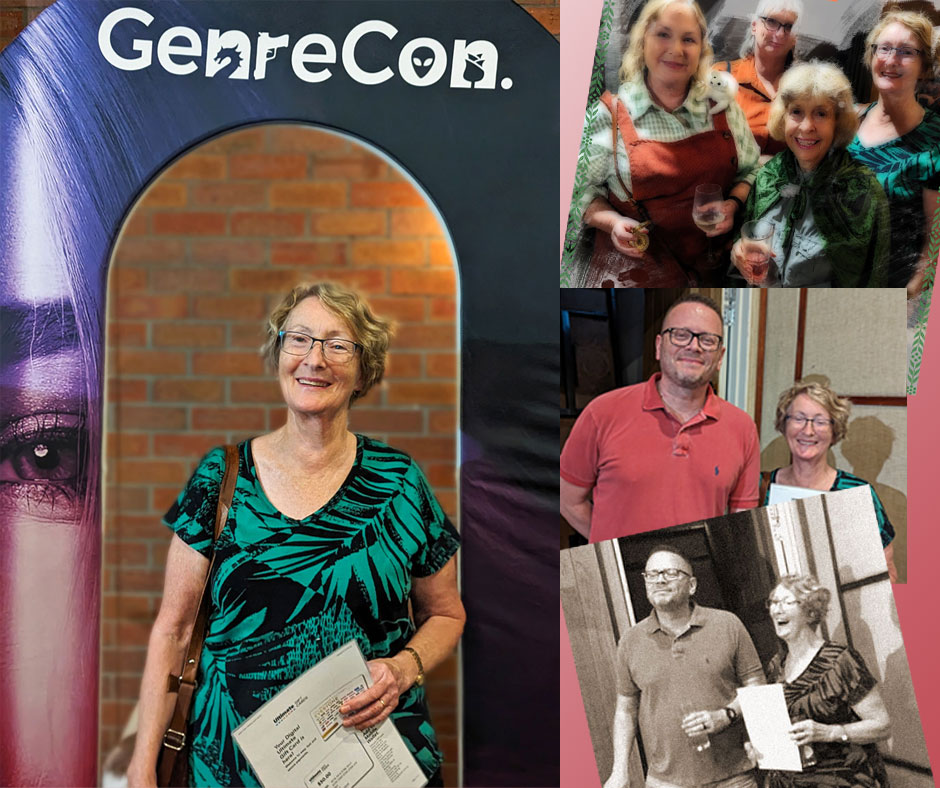
Being a writer of contemporary crime, historical crime and fantasy, I found the hardest thing about the three-day weekend was choosing whose workshop or panel to attend. Friday was a full-day workshop with Nick Earls on the Novella, and, with the novella’s recent rise in popularity, I jumped at the chance. I’m now halfway through writing two novellas. I told you GenreCon was inspiring. Saturday and Sunday were full of panels filled with authors, editors and publishers giving us their insights on new trends in publishing, as well as workshops on crime writing, sci-fi writing and getting into your villain’s head, to name a few.

There were talks on the craft of writing, how to write the crucial synopsis and cover letter, and a session on PR. Yes, an ugly word to many writers, but a necessary evil if we want to promote our product – our writing. Authors generously took us through their writing habits, how they created characters and plotlines, why they were driven to write these stories, and their experiences on their journey to publication. Julie Janson’s two-hour workshop on creating a crime novel was not to be missed.

I can see how my time at GenreCon has informed my most recent writing. Not only am I enthused to write more but I see an improvement in my writing itself. It’s more polished, more directed, I am able to clearly define my story’s plot-lines, my character’s arc, paring away the superfluous right down to the bones to build stronger prose.

I have the knowledge to direct my manuscripts to editors and publishers and give them my very best writing. I now have the skills to craft a tight synopsis and cover letter to accompany my manuscript to the publishers. And after a chat with a publishing house at GenreCon, my manuscript was requested for them to read. This particular pairing would not have happened except for GenreCon.

GenreCon is a long weekend where writers can learn, meet other writers and drink from the well of inspiration that only comes from writers gathering together and sharing their thoughts. Even little introverts like you and I can shine…and then escape back into our natural environment – the study, crouched over our laptops, wrapping the skin and bones around those voices in our heads.

Laree Chapman

I am extremely grateful to the Regional Arts Development Fund (RADF) for awarding me a Quick Response Grant to attend GenreCon 2024 in Brisbane. Their foresight in granting artists (and I include writers as artists) funding to help them attend festivals, events and workshops is greatly appreciated.

Writing for Children (Postponed)

The proposed workshop has been postponed until further notice.

 with

Astrid Lindgren said:

“I don’t want to write for adults. I want to write for readers who can perform miracles. Only children perform miracles when they read.”

Two days only
Saturday May 23 & Sunday May 24
Bundaberg Writers’ Club, Impact Community Services, 108 Bargara Road, Bundaberg East.


Saturday May 23 (10am – 2.45pm)
$65 includes morning & afternoon tea.

Creating Picture Books

‘Hands on’ how to build and shape that idea workshop. Language and structuring a picture book. Creating characters. Pacing and paging. Crafting and drafting.

Industry Overview

A session focussing on the nuts and bolts of getting your children’s story published. Manuscript presentation. Writing cover letters. How to approach publishers and Editors. The Pros and Cons of agents and multiple submissions. Various formats and their differences. Genres and themes. Covering from Picture Books to Young Adult stories.

Sunday May 24 (10am – 4pm)
$85 includes morning & afternoon tea.

Writing Chapter Books & Junior Fiction Series

Should you be considering the newly independent readers. How about writing a chapter book, or creating a series? How do you create a storyline and characters that keeps readers wanting more. This workshop looks at popular themes for older age groups, using language, pacing and the role of illustration.

How to be a hooker: Creating hooks that keep readers turning pages.

Analysing the different types of hooks, from killer opening lines to captivating chapter endings, find why they work and which is best for your type of story.

How to write the perfect pitch and the One Most Likely

Learn the secrets of writing a great pitch and have a go yourself in a supportive environment.

Book Now.


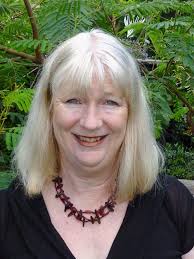
Meredith Costain’s work ranges from picture books through to novels and chapter books, poetry and non-fiction.

Her books include Musical Harriet  (adapted for television by the ABC), CBCA Honour Book Doodledum Dancing  and tween series A Year in Girl Hell. Her latest series is the best-selling, quirky Ella Diaries, which has been shortlisted for both environmental and children’s choice awards and published around the world.

Meredith has worked as an editor for children’s magazines and as the managing editor of several literacy schemes. She regularly presents writing workshops for adults and children in libraries, tertiary institutions and schools both around Australia and overseas and has taught Writing for Children and Young Adults in the Professional Writing and Editing course at RMIT and at the Victorian Writers’ Centre. Find out more at www.meredithcostain.com


Coming to Bundaberg: How to Write Popular Fiction


Queensland Writers Centre and Bundaberg Writers Club will be hosting a two day workshop covering the A-Z of Writing Popular Fiction.

These interactive workshops suit beginners and emerging authors, or experienced writers who feel they need to refine their technique.

Venue: BWC Meeting Rooms, 80A Woongarra Street, Bundaberg Central.


On Saturday, May 18

10.30am – 4.30pm

Learn how to pace your novel so that a reader won’t want to put it down.

Develop and  improve your writing skill-set through practical exercises and group discussion.

  • Create compelling hooks and story questions
  • understand the different pacing required in different genres
  • understand pacing needs to vary within a novel
  • learn how to slow or speed the pace of your story
  • recognise the boring bits, and have the courage to leave them out
  • learn how to ratchet up the tension in each page
  • understand how structure affects pacing

Book Now

On Sunday, May 19

10.00am – 4.00pm

Everything you need to know about writing commercial fiction, in a nutshell

Explore key areas using practical exercises.

  • how to generate ideas and turn those ideas into a workable premise
  • investigate voice, and how voice relates to genre
  • Understand conflict, and how it generates plot
  • What is ‘classic story structure’?
  • Learn to develop a framework for your story
  • Learn about character arcs and how to show character growth and change.
  • Understand the commercial fiction market and pathways to publication


Book Now

Authors’ DIY Publicist Class

Can you afford to ignore this Masterclass?

Offered as part of WriteFest, this Masterclass from Jaki Arthur, Head of Marketing Communications, Harper Collins (Sydney) provides a unique opportunity for regional writers who are ready to put their work onto the public stage.

Authors think the biggest question they have to grapple with is whether to publish traditionally, or to self-publish.

In reality the biggest question revolves around how they will make sure their works reaches an interested audience.

jaki-arthurAsk yourself, are you a proactive author, ready to work with your publisher and publicist to garner your novel the success it deserves? Or are you a writer who likes DIY, and needs to know how the professionals do it?


Jaki has over 20 years of experience in book publishing in New Zealand, the UK and Australia across retail and publishing sales, marketing and publicity. She has run her own successful arts PR agency and is currently Head of Marketing Communications at HarperCollins publishers,  Sydney. Jaki has worked and toured with authors from all over the world publicising books across all genres.

This is an interactive and feedback-focused workshop. Jaki lets you in on well-kept publicity secrets. You can gain practical skills to help place your book in the hands of your target audience. Learn how to make yourself heard over all the yelling and hallooing.

It’s a Masterclass for aspiring writers, self-published writers and traditionally published writers.

Now really, can you afford to ignore this Masterclass?

Limited places available on Saturday, October 8 and Sunday, October 9Please book early

Jaki facilitated this Masterclass at the Sydney Writers’ Festival in 2015. Read The Guardian’s article about the Masterclass HERE.

Short Story 2016 Update

Meg Vann

Meg Vann

Meg Vann has agreed to be our final judge this year. She says she reads too much – loves crime and thrillers – eats too well, and is perpetually ready for adventure, which is undoubtedly why she is taking on our short list, which this year numbers eight.

For writers who may not yet be familiar with Meg Vann, she was for many years a core member of the Queensland Writers Centre, taking on the role of Chief Executive Officer for three of those years but always, always, always encouraging writers to dream of growing sustainable careers; to be valued and respected and enjoyed.

Meg is a writer, a digital experimenter, writing tutor, lecturer (now at University of Queensland) while studying criminology at Griffith, and convenor of Sisters in Crime (Brisbane Chapter).

We expect that we’ll be finalising the winner and runner-up by mid May, 2016, at the latest.

Good Luck to our final eight.


Is there a difference between Landscape and Setting?

I think there is.

But what I think doesn’t matter. On May 21, BWC will be hosting T M Clark, a writer born in Zimbabwe, now calling Queensland home (having also lived in England) to help us understand how writers need to be Inspired by Landscape, rather than settle for using setting as an atmospheric backdrop.TMClark

Bookings are Essential through the Queensland Writers Centre.

As you can imagine, setting features strongly in TM Clark’s books, which are described as African Suspense. Some might think Tina Marie is ‘lucky’ to have first hand knowledge of a landscape we Australians probably consider exotic.

One point might be that we are all living our own exotic lifestyles. We just don’t notice any more.

The other point might be that Landscape is much more than a location, exotic or otherwise. Landscape isn’t a relief painted with broad brushstrokes. It’s not an accessory. It is the living world your characters find themselves in.

Elizabeth George, American Queen of Crime, a writer of mysteries set in England (you might know the Lynley Mysteries), has this to say in her book, Write Away.

On the surface, it would appear that landscape and setting are the same creatures, identical twins given different names just to confuse the beginning writer. This, however, would not be the truth since setting is where a story takes place–including where each scene takes place–while landscape is much broader than that…Landscape in writing implies much the same as that which is implied by the word when it’s used to refer to a location in a country: It is the broad vista into which the writer actually places the individual settings of the novel, sort of like the canvas or other medium onto which a painter has decided to daub color.

“You need to think about the landscape of your book because if you’re able to make the landscape of place real, you can make the land itself real, which gives you a leg up on making the entire novel real for the reader.”

If you want TM Clark’s take on the Inspiration Landscape can lend to your latest MS, make sure to book early.

Thoughts from the Back of the Room ~ Writing Tips We Love

A series of notes from Club Members:

Angus Gresham wrote for many years before becoming a club member. Since then he’s passed through many stages of learning, including having to reframe what he thought was ‘only commonsense’.
Writing is something everybody does, but all wannabe authors need to learn how writers do it differently, often alone and sometimes in the middle of creative chaos.

Angus Gresham

During my five years membership of BWC I attended various workshops, lectures, seminars and tutorials – all directed at improving one’s writing skills. I would hang on every word from the presenters and furiously scribble down copious notes – every word uttered seemed so important at the time; I couldn’t risk missing out on any of the gems of wisdom raining down. My notes were taken home, carefully filed and then largely forgotten. As a result a huge, unwieldy and somewhat illegible pile of papers accumulated.

Angus GreshamFinally I decided to do something about it. I pored over the years of note-taking in an attempt to determine what was worth rescuing. Some valuable writing tips were discovered among the mountains of more or less irrelevant scrawlings. Quite a few tips (the better ones) had been repeated over and over by various presenters. Some advice completely contradicted other advice.

The following is a sample of what I found useful. There has been no attempt to list in order of importance. For some people all the information provided may be of equal importance; others will find only some of the tips helpful.

**********

  • Don’t write unless you like doing it for its own sake. It would be great to be published and make lots of money, but if money is the primary focus, you won’t find writing enjoyable.
  • Read a lot, particularly in your chosen genre. When you read a good book, analyse what you like about it, and determine how you can use its positive elements in your own book.
  • Make notes, and plan months ahead of when you actually start the book.
  • You can use a working title which can be changed by you or your publisher at a later date.
  • One should only write for oneself, or for strangers; never for a set audience or family.
  • You’ve got to be happy with what you write. Do numerous drafts if necessary. Edit as much as you like.
  • First paragraph is crucial. You must hook readers from the very beginning. The real meaning of the first paragraph can be explained over the rest of the book. Conflict should start on page one.
  • End each chapter with a little bit of mystery, or even some excitement. This will ensure the reader keeps on reading to see what happens next.
  • Do emotions first, and structure last. You must feel compassion with, and become a part of, the characters. The reader should be able to identify with the characters and become emotionally engaged. Readers have to care about the characters – but they don’t necessarily have to like them.
  • Be aware of pace. Keep the pace moving. Delete all (or most) adverbs in your draft. This allows the story to flow much faster thus maintaining reader interest.
  • It’s OK to have short paragraphs; they give the reader breathing space. It’s OK to have short chapters; they give the reader a break.
  • Use internet research. It is much quicker than traditional library research. It may not be 100% accurate, but most of your readers are not experts on the subject you are writing about. The overriding importance is to tell a good, but believable, story. Wikipedia has a great overview on any topic.
  • Use your professional knowledge and life experience in your writing. Write about what you know. This saves having to do a lot of research.
  • Put your story away for a couple of months and then read it as if it’s someone else’s work. Does the story grab your attention and hold it through-out?
  • Read your story aloud. This will reveal any longwinded or awkward sentences.

Finally, you have to work out the system that works best for you.


Check out 2016

Late 2105 release from Queensland Writers Centre:

  • Books from our Backyard – for the fourth year, a catalogue of books published as advised by Queensland authors.
  • Programme, January -June. Check out the online courses. Be aware, if the fees are daunting, grants are available (try RADF [Regional Arts Development Fund] or local councils) for professional development.


A short story about how to win

It’s the easiest thing in the world to write a bad short story. You could:

  1. fail to read short stories (eg., collections like Nam Le: The Boat, Cate Kennedy: Like a House on Fire)
  2. write like it was 1964 (Writing has changed since then and competitions are being won everyday by people who are writing like it’s 2015.)
  3. colour your prose purple (Most writers exercise a little purple in the beginning, but practice polishes the melodrama out.)
  4. narrate a Series of Loosely Connected Events (apologies to Lemony Snicket)
  5. believe an excess of poetic language equals fine writing (It doesn’t. It may equal poetry.)
  6. write a story longer than the space it must fit, then hack off the ending. (Think Cinderella’s big sister cutting off her toes to better fit into the slipper – and still failing.)
  7. believe that, because you’re retelling a true event,  you don’t have to write it like a story. (Life is stranger than fiction. Make us believe. Make us Suspend our Disbelief.)
  8. write a story just like everybody else’s story. (This only counts if you’ve nothing new to say.)
  9. tell yourself stories don’t have to say anything special. (Stories are a communication between writer and reader. If the writer has nothing to say, why should a reader care to listen.)
  10. cut a slab out of the middle of your novel. (Short stories and novels are generally very different stylistically. For one thing, short story prose has to be tight, concise, efficient. Novelists can be more expansive when writing.)

If you want to win:

  • Come up with a cracker of an idea.

Aiming to use perfect prose to express a fresh idea will secure a writer a good chance of a win, but if you can’t manage both, remember: more people have been successful with a fresh idea and fairly ordinary prose than have won with an uninspiring story impeccably written.

  • Create three dimensional characters.

Readers must believe in your characters in order to care what happens to them. Give them flaws and weaknesses. Give them something to fight for.  Don’t be afraid to let your characters speak. In fact, encourage it.

  • Remember to create a setting.

Seems obvious, I know, but so many characters float through the story world like a ghost, neither touching nor being touched by their surroundings. Even if the story is happening in the ubiquitous kitchen, give us a glimpse of the red range, the swing in the back yard, etc.

  • Begin where it counts.

Where does it count? In medias res (in the middle of things) is when.
When he throws the knife. When she opens the Christmas card. When she pulls on her clown outfit for the first time. When he learns to tap dance.
You don’t have enough words in a short story to waste them on an introduction.

  • End when it stops counting.

Usually the beginning will help you work out when the story is finished. If he threw the knife to protect himself, then the story ends when he’s safe. If the Christmas Card makes her cry, then the story might end when she’s happy again. That clown suit she was pulling on, the story ends when we find out whether it was a good idea, or not. And the tap dancing – ask Billy Elliot – that story might end when mum and dad realise he can dance better than he can kick a goal.

Some things to avoid (or at least consider carefully) when writing a short story

  1. warmed over ideas
  2. characters with nothing to lose
  3. introductions
  4. stereotypes and cliches
  5. more than one point of view character
  6. dialogue that sounds mechanical
  7. It was a dream endings
  8. a plethora of pulchritudinous, perfectly purple pronouncements
  9. forgetting to include a plot

Download an entry form. Competition closing March 2016